

Salt Stains on Leather Shoes: Prevention and Removal Guide
Salt stains are a common issue in colder climates. Salt can damage leather, leading to deterioration. Here’s a guide on how to prevent salt stains and how to remove them if your shoes do get exposed to salt.
Why Salt is Bad for Leather Shoes
Salt is used to lower the freezing point of snow and ice below 0 degrees Celsius, creating water instead of slippery snow and ice. While salted roads and sidewalks can still freeze, the lower temperatures and dry air make the surfaces less slippery. Using salt in colder areas to prevent slippery roads and sidewalks makes sense and prevents numerous accidents.
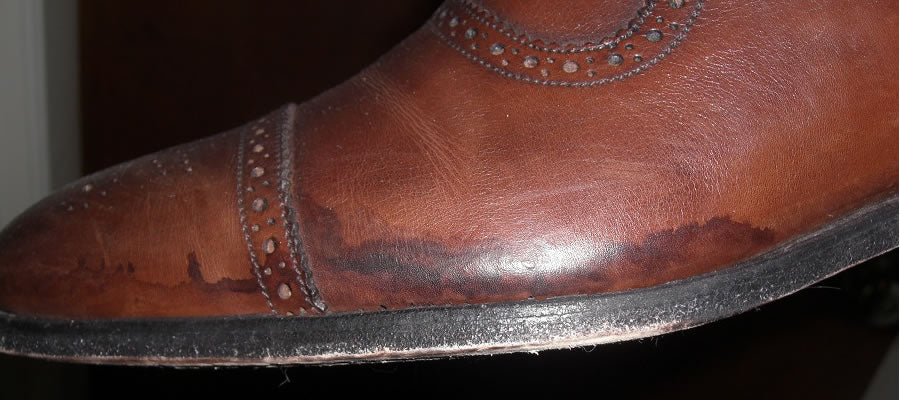
However, salt is corrosive to many materials, including various metals (bad for cars and bikes) and leather, which is bad for shoes. When salt gets on your shoes, it first creates an unsightly stain, but the more significant damage is that the leather dries out and eventually cracks, which is the most severe issue for leather. Therefore, always ensure you remove salt from leather shoes, even if a stain has already formed.
How to Prevent Salt and Moisture Stains
The best way to avoid salt stains and dried-out leather is to ensure that salt never stays on your shoes. Make it a habit to always brush off your shoes with a shoe brush when you come inside after being on salted surfaces (even if it’s wet at the beginning of spring, salt often remains on the streets even after the snow has melted).

How to Treat Salt Stains
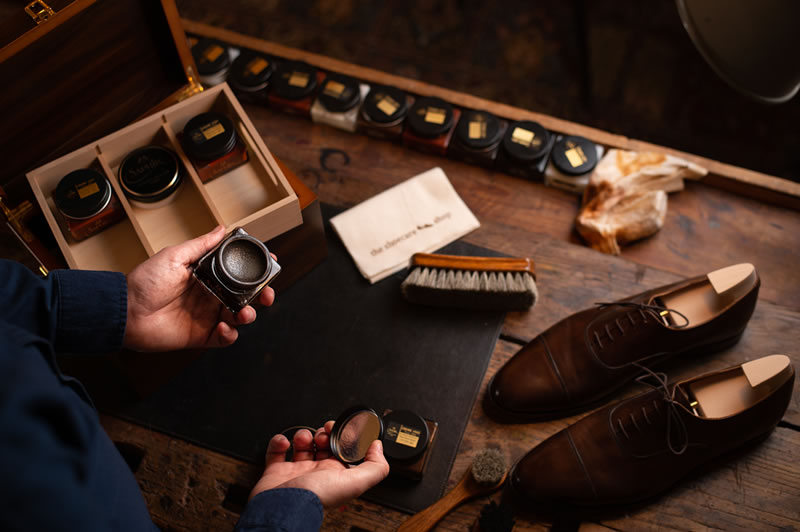
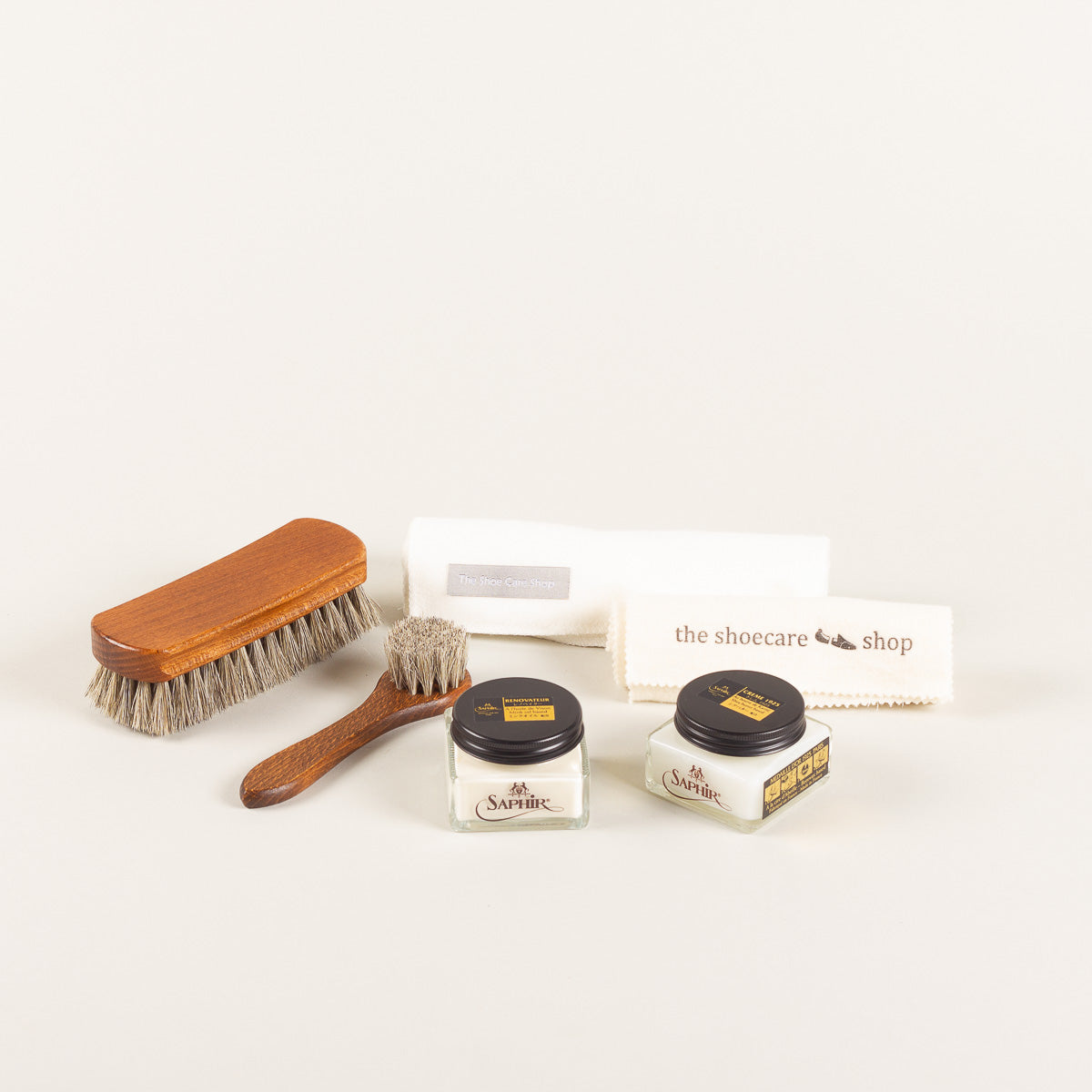
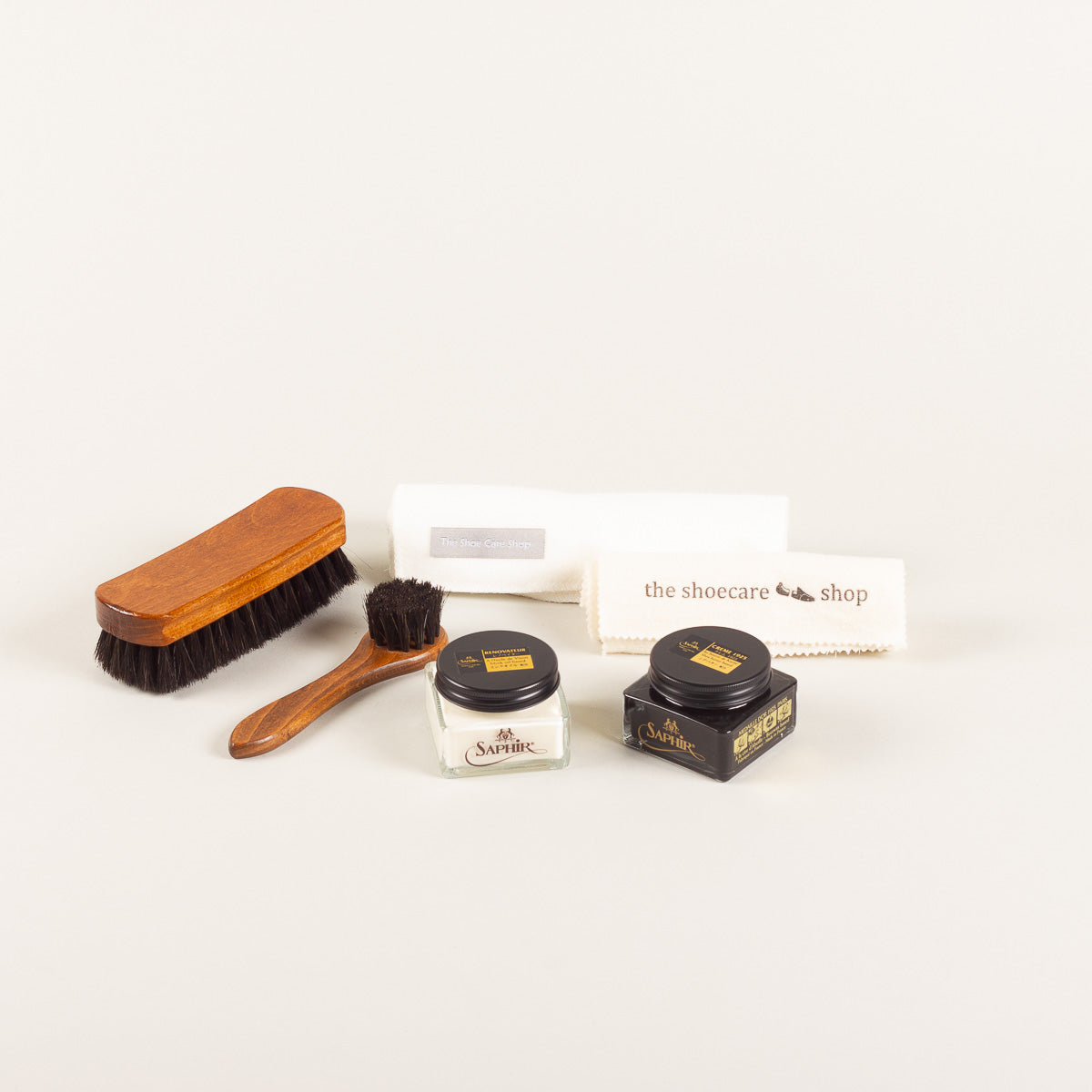
First, thoroughly brush off the shoes to remove any loose salt and dirt. Next, we recommend wiping the shoes with Saphir Winter Hiver. This moisture and salt stain remover neutralizes the salt in the leather and removes most of the white rings from the leather. Once the shoes are dry and the salt is removed, ensure you rehydrate the leather properly, preferably first with Saphir Médaille d'Or Renovateur and then with shoe cream like Saphir Médaille d'Or Pommadier and optionally Pate de Luxe shoe wax (also read our beginner shoe polish guide to learn how to polish your shoes properly). If you have suede or nubuck shoes, use a spray that nourishes the leather and then waterproofs it, such as Saphir Médaille d'Or Super Invulner. However, ensure all salt is removed before applying cream, wax, or waterproof spray, otherwise the salt will be encapsulated and the leather will continue to dry out.
Read more
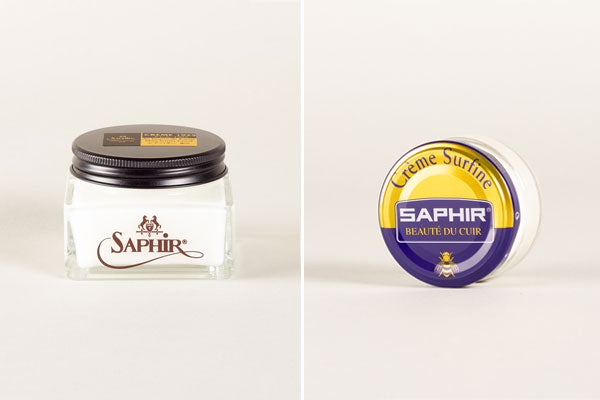
When it comes to maintaining leather shoes, Saphir is a name known among shoe enthusiasts. Saphir is a French brand that produces high-quality shoe care products. Their product lines, Saphir Médail...
One of the most essential accessories for shoe maintenance is the shoe polish cloth. This handy cloth is designed to keep your shoes in optimal condition and give them a beautiful shine. Technicall...